






750W vs 1700W Peak Power: What Electric Trike Motor Ratings Really Mean
You are comparing electric trikes online. One product page says 750W Motor, while another highlights 1700W Peak Power in large letters.
Which one is more powerful? Is 1700W more than twice as strong as 750W? And does a bigger motor number mean your electric trike will climb hills more easily or carry groceries more comfortably?
The answer is more interesting than the numbers suggest.
750W and 1700W can describe different operating conditions of the same motor. They are not necessarily competing specifications.
Understanding the difference helps you compare electric trikes more accurately, whether you need one for grocery shopping, neighborhood transportation, weekend outings, or routes with frequent stops and hills.
What Does 750W Motor Power Actually Mean?
Watts (W) measure power—the rate at which energy is transferred or converted.
In electric trike specifications, you will often encounter two terms: rated power (sometimes called nominal power) and peak power.
Rated power refers to a manufacturer's declared motor rating under particular operating conditions. It provides a useful reference for understanding the motor, but it should not automatically be interpreted as the exact power available at every speed, temperature, or riding condition.
Peak power refers to a maximum output or input figure under certain conditions. It usually describes a higher-power operating point rather than the motor's normal rating.
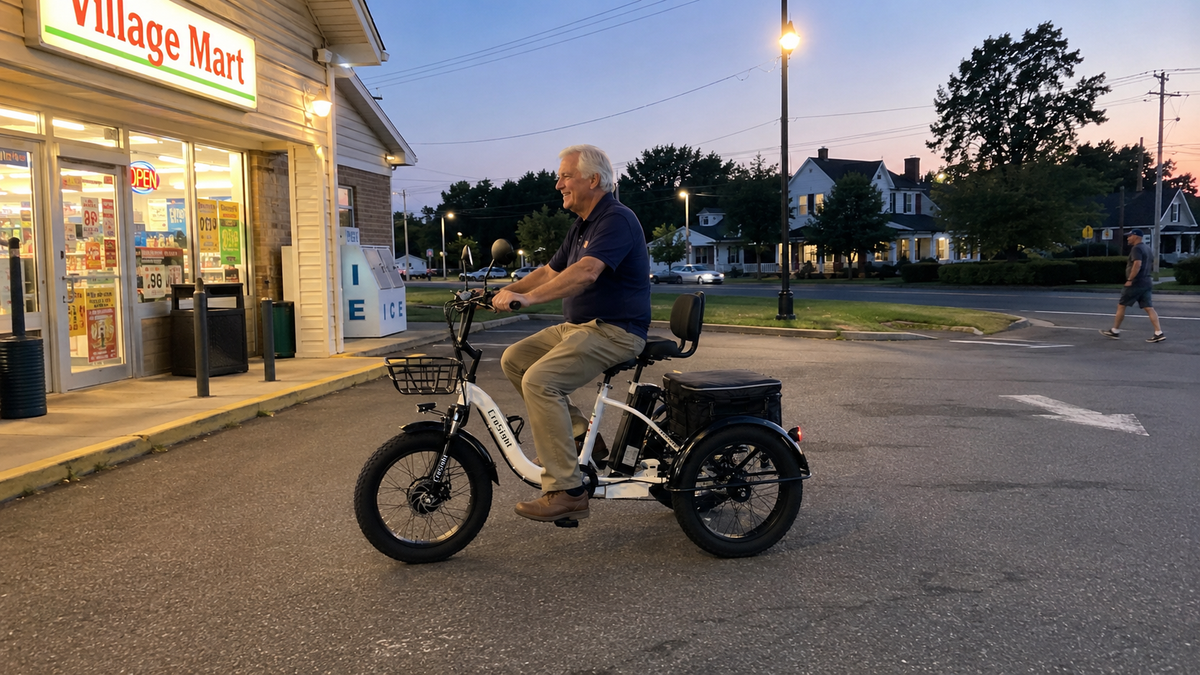
For example, the CroSight T3 Pro Electric Trike is listed with a 750W brushless motor and 1700W peak power.
That does not mean it has two separate motors. The figures refer to different power descriptions of its motor system.
It also does not mean the motor can deliver 1700W continuously throughout an entire ride.
The exact duration, measurement location, and testing conditions behind a peak rating matter. Where those details are not published, they should not be assumed.
As electric bicycle component manufacturer Grin Technologies explains, motor power ratings depend on several variables, including motor speed, controller settings, battery voltage, and thermal conditions.
This is why comparing two electric trikes by the largest wattage displayed on their product pages can be misleading.
Why Can a 750W Motor Have 1700W Peak Power?
Think about a typical grocery-shopping trip.
You leave home, accelerate from a stop, travel along a relatively level road, and eventually approach an uphill section.
The motor does not face exactly the same demand throughout that journey.
Starting from a stop requires acceleration. A hill creates additional resistance. On a level road at a steady speed, the motor may operate under a different load.
An electric drive system can operate at different electrical currents and power levels in response to changing demands, within the limits of its battery, controller, motor, and protective systems.
A higher peak rating can describe the system's short-term power capability.
However, peak wattage alone cannot tell you how quickly a trike accelerates, what grade it can climb, or how long it can maintain demanding operation.
Those outcomes also depend on torque, wheel speed, gearing, traction, total weight, and temperature.
For shoppers, this means a 1700W peak rating is useful information, but it should be read alongside the rest of the electric trike's specifications—not treated as a complete performance test.
Electrical Input Power vs Mechanical Output Power
There is another important distinction many product listings do not explain.
Electrical input power is the power supplied electrically to the motor or system at a defined measurement point.
Mechanical output power is the power the motor produces through rotational motion.
Some energy is lost during conversion, principally through electrical resistance, magnetic effects, and mechanical losses.
Motor manufacturer maxon's technical documentation explains this relationship through motor efficiency, torque, and rotational speed.
Imagine a simplified example where a motor receives 400W of electrical power and produces 300W of mechanical power.
Its efficiency at that particular operating point would be 75%.
These are hypothetical figures, not measurements of a CroSight motor.
Now imagine one electric trike manufacturer advertises peak electrical input while another advertises rated mechanical output.
Even if both specifications are accurate, their numbers cannot be compared directly without understanding the measurement methods.
When reviewing electric trike specifications, it is reasonable to ask the manufacturer whether a stated wattage refers to electrical input, mechanical output, or another defined rating.
How CroSight T3 Classic and T3 Pro Compare
CroSight's T3 lineup offers a practical example of why buyers should look beyond the wattage.
The CroSight T3 Classic offers two motor configurations.
| Model configuration | Listed motor power | Listed peak power | Drive system |
|---|---|---|---|
| T3 Classic 650W | 650W | 1200W | Front-wheel drive |
| T3 Classic 750W | 750W | 1700W | Front-wheel drive |
| T3 Pro | 750W | 1700W | Rear-wheel drive with differential |
These are published product specifications, not a comparison of independently measured mechanical output.
An important detail stands out: the 750W T3 Classic and T3 Pro share the same advertised 750W motor rating and 1700W peak figure, but they use different drive arrangements.
The T3 Classic uses a front-wheel-drive system.
The T3 Pro uses rear-wheel drive with a differential. During a turn, the inside and outside rear wheels travel different distances. A differential allows them to rotate at different speeds, helping the drivetrain accommodate that difference.
This can influence how a three-wheeled vehicle behaves while turning, independently of its advertised motor wattage.
A differential does not increase the motor's stated peak power, and it does not eliminate rollover risk or replace careful riding.
The choice between front-wheel drive and rear-wheel drive therefore involves more than simply choosing the largest wattage.
For buyers comparing these configurations, steering feel, traction conditions, intended routes, and overall vehicle design deserve consideration alongside power ratings.
What Matters More: Motor Power, Torque, or Battery?
Motor power is only one part of an electric trike's performance.
Torque and motor speed
Torque describes rotational force. Power depends on both torque and rotational speed.
That relationship matters when starting from a stop or traveling uphill. However, even a large advertised torque number needs context: where was it measured, and under what conditions?
Motor torque and torque at the driving wheel are not necessarily equivalent.
Battery and controller
The battery supplies electrical energy, while the controller regulates how electrical power is delivered to the motor.
The T3 Classic product page lists a 48V 15Ah battery for its 650W configuration and a 48V 20.8Ah battery for its 750W configuration. The T3 Pro is listed with a 48V 20.8Ah removable battery.
Battery capacity helps describe stored energy, but it should not be confused with motor power. A larger battery does not automatically mean a more powerful motor.
Range also depends on the riding conditions, including speed, rider weight, load, assistance level, terrain, temperature, and tire pressure.
Tires, load, and drivetrain
CroSight T3 models feature 20 × 4-inch fat tires, pedal-assist options, and 7-speed gearing.
These features are relevant to how the trike is used. Tire traction can influence how effectively driving force reaches the ground, while mechanical gearing allows the rider to adjust pedaling effort and cadence.
Neither feature should be treated as an automatic increase in motor wattage.
Together, these specifications help describe the whole vehicle rather than just one component.
What About Hills, Groceries, and Everyday Riding?
A motor specification becomes more useful when you connect it to the trips you actually plan to make.
Riding around the neighborhood
For relatively level neighborhood roads with frequent stops, consider how the trike starts, turns, brakes, and handles at lower speeds.
A high peak-power figure alone does not establish that the vehicle is easier to control.
Grocery shopping and carrying cargo
Carrying groceries increases the total weight the trike must move.
CroSight T3 models are listed with a maximum vehicle load capacity of 600 lb. That figure describes a load limit; it does not establish hill-climbing performance at that load.
Rider weight, cargo distribution, basket limits, braking distance, and handling are all relevant.
A trike suitable for a short, level shopping journey may face different demands on a steep route with a full load.
Riding uphill
A short incline and a long hill are different operating situations.
An electric motor may be capable of higher power briefly, but sustaining demanding operation creates heat.
Motor temperature depends on operating conditions, and exceeding thermal limits can affect performance or require protective power reduction.
Maxon's motor data guidance explains why motor characteristics and operating conditions, including temperature, matter when interpreting specifications.
If your regular journey includes a long uphill section, ask about the trike's documented grade capability, suitable operating conditions, and limitations for your expected combined rider and cargo load.
Do not assume that a larger peak number guarantees better performance throughout the climb.
Does 1700W Peak Mean a Faster Electric Trike?
Not necessarily.
Top speed depends on more than the motor's maximum power figure.
The controller, vehicle configuration, operating limits, terrain, load, and available traction can all affect performance.
Both the 750W T3 Classic and T3 Pro are advertised with speeds of up to 22 mph.
Their identical advertised peak wattage does not prove that their acceleration, cornering behavior, or performance under load is identical.
Likewise, two trikes with different peak ratings may still have similar stated top speeds.
Peak wattage and maximum speed describe different aspects of a vehicle.
For a buyer, it is more useful to consider the advertised speed alongside the intended riding environment and any applicable local regulations.
Three Questions to Ask Before Comparing Motor Wattage
When choosing between electric trikes, start with the exact model and configuration rather than a general advertisement.
-
What does the wattage measure? Is the figure a declared motor rating, peak electrical input, or mechanical output?
-
What conditions apply to peak power? Is there a documented duration, controller limit, or test method?
-
Does the complete trike suit my route? Consider hills, expected load, turning conditions, battery capacity, and the vehicle's documented operating limits.
If the manufacturer does not publish enough information to answer a technical question, ask for clarification instead of filling the gap with assumptions.
Frequently Asked Questions

Is a 1700W peak motor better than a 750W motor?
Not necessarily. The two numbers may describe different operating conditions or measurement points. Compare equivalent specifications and the complete drivetrain before drawing conclusions.
Is 750W enough for an electric trike?
It depends on the vehicle, route, load, and expected riding conditions. A 750W label by itself cannot establish whether a particular trike is suitable for a specific hill or cargo requirement.
Does a rear differential give an electric trike more power?
No. A differential allows driven wheels to rotate at different speeds during turns. It changes drivetrain behavior, not the motor's advertised wattage.
Does higher peak power mean longer battery range?
No. Peak power and battery energy capacity are different specifications. Actual range also depends on vehicle efficiency and riding conditions.
Choose an Electric Trike Based on the Ride, Not Just the Number
A larger wattage can catch your attention, but it should not make the buying decision for you.
A 750W motor rating and a 1700W peak rating can both be meaningful when the manufacturer explains what each number represents.
Just as importantly, two electric trikes with similar power specifications can offer different riding experiences because of their drive systems, tires, weight distribution, and controls.
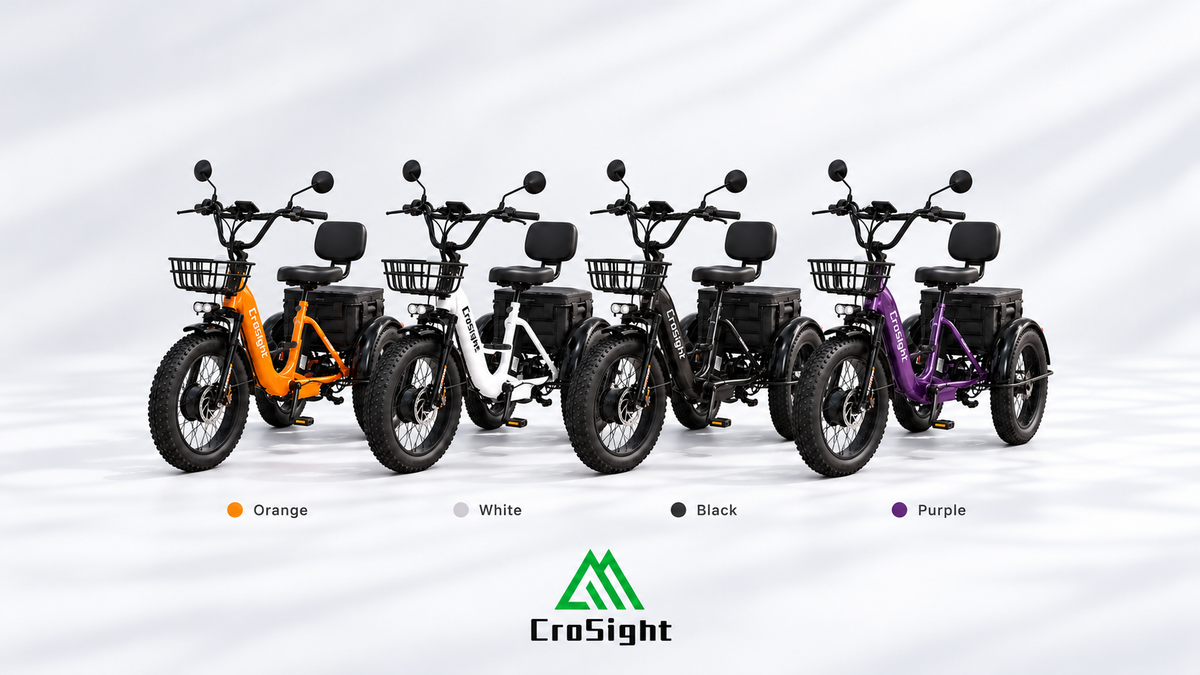
CroSight offers the T3 Classic in different motor configurations and the T3 Pro with a rear-drive differential, giving buyers options beyond a single peak-power figure.
Explore the CroSight Electric Trike Collection to compare available configurations.
If you have a question about motor ratings, your regular route, or a specific configuration, contact CroSight Support and include the exact model you are considering.
The right electric trike is not simply the one with the biggest number. It is the one whose documented capabilities match how and where you intend to ride.

Leave a comment
This site is protected by hCaptcha and the hCaptcha Privacy Policy and Terms of Service apply.