







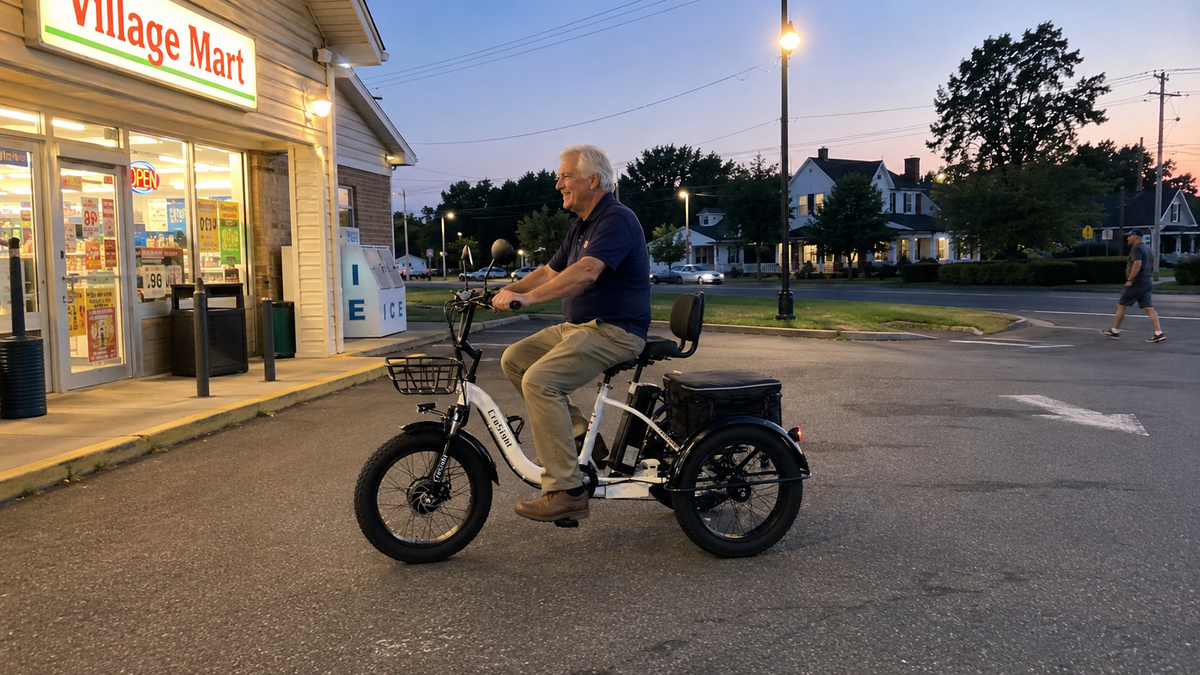
Electric Trike or Electric Bike for Everyday Errands: Which Makes Life Easier?
The grocery store is only two miles away. You need milk, bread, a few vegetables, and maybe a bag of pet food. It sounds like a quick trip.
But then you reach the checkout. The bags are heavier than expected. Your phone reminds you to stop at the pharmacy. And when you finally get home, you still have to unload everything and put your vehicle away.
Suddenly, the ride itself seems like the easiest part.
This is why choosing between an electric bike and an electric trike involves more than comparing motor power, battery range, or top speed. The real question is simple: Which one makes your everyday routine easier, from leaving home to putting the groceries away?
Let's look at the problems real riders discuss online—and how different wheel arrangements change the experience.
1. The Grocery Run That Gets Heavier on the Way Home
Shopping by bike often sounds easy until you start loading the bags.
In a Reddit discussion about urban grocery shopping, one rider described carrying approximately 45 pounds of groceries on an electric bike. The additional weight made the bike feel somewhat unstable, particularly before getting moving.
It's a familiar situation. You planned to buy a few things, but now you're standing outside the store with two full bags, a carton of milk, and something bulky that wasn't on your list.
On a conventional two-wheel electric bike, you need to keep the vehicle balanced while attaching bags, starting, stopping, and riding slowly. A loaded kickstand may help during parking, but only if it is designed and rated for that use.
An upright electric trike works differently.
Its three wheels form a supporting footprint, allowing the vehicle to remain upright on suitable level ground without the rider continuously balancing it. This can make organizing shopping bags more convenient, especially when you're stopped.
Some electric trikes also accommodate dedicated rear cargo baskets or platforms. Instead of hanging every shopping bag from the handlebars or squeezing everything into panniers, riders may have a separate place for groceries.
But there's an important distinction: three wheels don't automatically mean greater carrying capacity.
Every vehicle and cargo attachment has its own weight limits. Heavy loads still affect braking, steering, and cornering. Groceries should be secured and distributed according to the manufacturer's instructions.
The advantage is not that an electric trike can carry unlimited shopping. It's that the three-wheel layout can make stationary loading and unloading less demanding.
2. The Parking Lot Problem Nobody Mentions
Imagine arriving at a supermarket with a huge parking lot.
There are hundreds of spaces for cars, but only one bicycle rack near the entrance. Worse, it's already occupied.
This isn't an unusual concern in cycling communities. In a Reddit discussion about limited bicycle parking, riders questioned why stores provide extensive car parking while offering so few suitable spaces for bicycles.
And finding a space is only half the problem.
In another discussion about leaving electric bikes outside, riders expressed concerns about theft during ordinary stops.
A quick visit to the pharmacy can become stressful when you're wondering whether your bike will still be there when you return.
An electric trike doesn't eliminate these concerns. It still needs a suitable parking location, appropriate locking equipment, and protection against rolling.
However, its three-wheel design changes one part of the process.
On suitable level ground, an upright trike can support itself while stationary. The rider doesn't need to continuously balance the vehicle while getting off or preparing to unload groceries.
That can be helpful during repeated stops.
The tradeoff is space. A trike's wider rear wheels may not fit conventional bicycle racks, narrow parking spaces, or crowded sidewalks.
So before choosing a vehicle, think about where you actually park. A trike may make stopping and unloading easier, but a conventional electric bike may be simpler to position in a tight parking area.
3. When One Errand Turns Into Three Stops
You leave home planning to buy groceries.
Then you remember you need toothpaste. The pharmacy is nearby, so you stop there too. On the way back, you decide to pick up a package.
Now your simple grocery trip has turned into three errands.
And suddenly, you have another problem: where do you put everything?
In a Reddit discussion about shopping with a cargo bike, riders discussed the inconvenience of managing purchases while visiting multiple stores.
Another Reddit conversation about grocery-carrying setups explored different combinations of panniers, front baskets, and containers.
These conversations highlight a practical issue that rarely appears in electric bike advertisements.
Carrying something is one challenge. Keeping several different purchases organized is another.
On a conventional electric bike, riders may rely on side panniers, front baskets, or a rear rack. These arrangements can work very well, especially for smaller purchases.
Some upright electric trikes can accommodate wider rear baskets or dedicated cargo platforms because of their rear-wheel layout.
A separate cargo area may make it easier to organize groceries, packages, and personal belongings without carrying everything on your back.
The stationary support of three wheels can also be useful when you need to rearrange bags between stops.
However, the presence of three wheels doesn't guarantee a basket, and it doesn't guarantee that your purchases will fit.
Check the actual cargo dimensions, attachment ratings, and total vehicle load limits.
There's also a security question. If you're visiting several stores, you need a plan for belongings left on the vehicle. A basket provides storage space, not theft protection.
For everyday errands, thoughtful cargo organization can matter just as much as battery range.
4. The Packing Puzzle: When Everything Fits, but Nothing Feels Right
Have you ever finished packing your shopping bags only to discover that the heaviest item is sitting on top?
Or found yourself trying to squeeze a bicycle lock into a bag already filled with groceries?
In a Reddit discussion comparing panniers and trailers, one rider mentioned a chain lock weighing approximately 15 pounds, taking up valuable carrying space.
Other riders have discussed transporting combinations of pet food, gardening supplies, and household items, raising questions about weight distribution.
These aren't unusual shopping lists. They're ordinary errands that become complicated when cargo space is limited.
An upright electric trike can offer a different loading arrangement when equipped with an appropriate cargo basket.
A dedicated basket or platform can provide a defined space for groceries and other items, rather than requiring everything to be carried in bags attached to the bicycle or rider.
The three-wheel structure also allows the vehicle to remain upright while loading on suitable level ground.
That means you can focus on arranging the cargo instead of simultaneously supporting the vehicle.
But cargo placement remains important.
A poorly distributed load can affect steering, increase stopping distance, or raise the risk of instability during turns. Heavy items should be placed according to the vehicle manufacturer's guidance, and nothing should interfere with the wheels, brakes, or controls.
The goal isn't to carry as much as possible. It's to carry an appropriate load in a way that's organized, secure, and manageable.
5. The Hardest Part Might Happen After You Get Home
You made it through traffic. You found parking. You bought everything you needed.
Now you're home.
And your vehicle has to go down a narrow passage, around a sharp corner, or up a flight of stairs.
In a Reddit discussion about choosing an electric bike for grocery trips, one shopper described the challenge of storing a vehicle in a basement and finding a cargo electric bike heavy to handle.
This is one of the most overlooked parts of electric vehicle ownership.
A vehicle can be enjoyable to ride but inconvenient to store every day.
For someone with a ground-level garage and a wide entrance, an upright electric trike may fit naturally into the routine.
Its three wheels support it while stationary on suitable level ground, and it can be rolled into storage without continuously balancing it.
But a different home layout changes the decision completely.
If you need to carry the vehicle upstairs, pass through a narrow gate, or turn through a tight hallway, a trike's width and weight may become serious disadvantages.
Even a folding electric trike isn't automatically easy to lift or carry.
Before buying either design, measure the narrowest opening and the space immediately beyond it. Check the vehicle's full width, weight, and approved handling instructions.
A useful question is: Can I comfortably put this vehicle away after every single trip—not just on the day I buy it?
6. Can an Electric Bike or Trike Really Replace Short Car Trips?
One reason people consider electric bikes and trikes is the possibility of using a car less often.
A quick grocery run, a pharmacy visit, or a trip to the post office may not always require a full-size vehicle.
In Reddit discussions about using e-bikes for errands and saving gas, riders have raised both the appeal of reducing car use and concerns about road safety.
And those concerns matter.
A route that's comfortable in a car may feel very different on a smaller, slower vehicle.
Before treating an electric bike or trike as a practical alternative, consider the distance, traffic conditions, road surfaces, available routes, and local regulations.
The National Highway Traffic Safety Administration recommends planning bicycle routes with lower traffic volumes and slower vehicle speeds where possible.
Electric bikes may be well suited to routes where a narrow vehicle and familiar bicycle handling are useful.
Upright electric trikes may appeal to riders who value support at stops and convenient stationary loading.
However, fixed upright trikes do not lean through turns like conventional bicycles. Their handling requires practice, and turning too quickly can increase the risk of tipping.
Neither design removes the need for safe riding habits, suitable infrastructure, or appropriate route planning.
Replacing some short car trips may be realistic. Replacing every car trip is a different question.
7. Which Vehicle Fits Your Actual Routine?
Instead of choosing based on wheel count alone, picture three ordinary situations.
You have a ground-level garage and usually shop close to home.
An electric trike may be worth considering if you value support while stopping and loading groceries, and its width fits your route and storage area.
You live upstairs and need to carry your vehicle after every ride.
Weight, dimensions, and handling may matter more than cargo arrangements. A narrower electric bike could be easier to accommodate, although it may still be too heavy to lift safely.
You ride through narrow gates and crowded bicycle parking areas.
A conventional electric bike may be more practical because of its narrower footprint. An upright trike requires sufficient clearance for both rear wheels and enough space to turn.
If possible, try the same everyday tasks on both designs before deciding.
Practice getting on, starting, stopping, turning slowly, securing the vehicle, and moving it by hand in a safe environment.
The Van Raam tricycle user manual emphasizes practicing braking and turning because three-wheel handling differs from conventional cycling.
Also check the specific vehicle's load limits and cargo instructions before attempting loaded rides.
8. The Best Everyday Vehicle Is the One That Makes the Whole Trip Easier
A trip to the grocery store isn't just about covering two miles.
It's about getting through your gate, navigating the route, finding parking, carrying what you bought, and putting everything away when you return.
The experiences shared in cycling communities show how easily small inconveniences can become important parts of daily life.
A conventional electric bike often offers a narrower footprint and familiar bicycle handling.
An upright electric trike can offer stationary support and, on appropriately equipped models, convenient cargo organization.
Neither is automatically the better choice.
Before deciding, ask yourself three questions:
-
Where will I park and store the vehicle?
-
What do I regularly need to carry?
-
Which part of my everyday route is the most difficult?
The best choice isn't necessarily the vehicle with the biggest battery or strongest motor. It's the one that makes the entire errand—from your front door and back again—more manageable.



Leave a comment
This site is protected by hCaptcha and the hCaptcha Privacy Policy and Terms of Service apply.