







Pedal Assist vs Throttle on an Electric Trike: What Riders Really Need
You're heading to the grocery store on your electric trike. The first stretch is a quiet neighborhood street, where you'd like to pedal at your own pace. A few blocks later, you stop at an intersection. On the way home, you're carrying groceries and facing a gradual uphill climb.
Would you rather keep pedaling with help from the motor, control the power with your hand, or switch between the two?
That's the real question behind pedal assist vs throttle on an electric trike.
Both systems provide electric power, but they respond to different rider inputs. Understanding those differences can help you choose a trike that suits how you actually want to ride.
And as real electric trike owners have shared online, the details matter far more than simply having a motor.
Pedal Assist vs Throttle: What's the Difference?
Pedal assist (PAS) activates motor assistance when the system detects that you're pedaling. Depending on the trike, assistance may respond to how quickly you're turning the pedals, how hard you're pushing, or a combination of both.
Throttle control lets you request motor power using a hand-operated control. On trikes that support throttle-only operation, you can move without continuously pedaling.
Here's how the two compare:
| Pedal Assist | Throttle | |
|---|---|---|
| How it works | Motor assistance responds to pedaling | Motor power responds to a hand control |
| Do you need to pedal? | Yes, to receive assistance | Not necessarily |
| Main attraction | Continue pedaling with motor support | Choose when to request power by hand |
| Common concern | Unexpected assistance or unsuitable assist levels | Abrupt starts or difficult power modulation |
| Everyday use | Recreational rides and steady cruising | Short powered sections or riding without pedaling |
Neither method is automatically better. Motor programming, sensor design, and individual preferences determine how the controls feel.
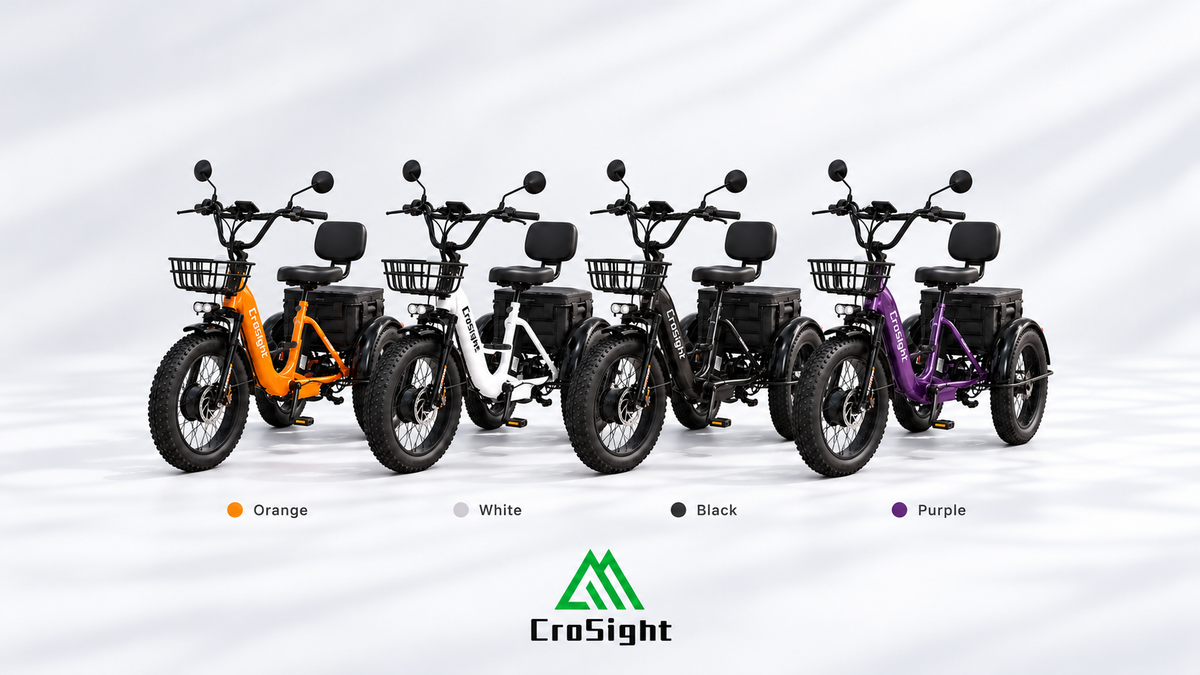
Some electric trikes, including the CroSight T3 Series, offer both systems alongside a pedal-only mode.
Why Some Electric Trike Riders Prefer Pedal Assist
One of the most appealing things about pedal assist is that it allows you to keep riding in a familiar way.
You still turn the pedals. You can still choose a comfortable rhythm. But the motor shares part of the work.
Riding for exercise without making every hill a challenge
In a Reddit discussion about electric tricycles, one recumbent trike owner described adding electric assistance to an existing tricycle.
The rider explained that flat roads still required meaningful pedaling, while the motor made hills less demanding. That allowed longer rides without the same level of exhaustion.
The owner summarized the experience:
"I'm still getting lots of exercise, it's just more fun."
This captures a reason some people choose pedal assist: they don't want to stop pedaling. They want to make pedaling more manageable.
Consider a weekend ride along a paved trail. You might enjoy moving your legs through most of the journey but appreciate some extra help when the terrain becomes more demanding.
Pedal assist can serve that preference without requiring you to continuously operate a throttle.
But not every pedal assist system feels the same
In August 2026, another electric trike owner described a very different experience in a Reddit discussion about unexpected pedal-assist acceleration.
The rider reported that the trike accelerated toward the speed associated with the selected PAS level, making low-speed control difficult.
In the rider's words:
"it automatically accelerates to 3 or 7 MPH"
Instead of maintaining a comfortable pedaling rhythm, the owner found themselves briefly turning the pedals, allowing the vehicle to accelerate, and then coasting.
That experience raises an important question for buyers:
Does the pedal assist system respond in a way that matches how you want to pedal?
The complaint concerns one particular trike, not every cadence-based system. However, it illustrates why testing the actual response matters more than counting assistance levels.
Why Other Riders Prefer Throttle Control
Now imagine a different situation.
You've finished shopping, loaded your groceries, and are getting ready to ride home. Perhaps you'd prefer to travel part of the route without pedaling.
This is where throttle control becomes useful.
The freedom to ride without continuously pedaling
In another Reddit discussion about pedal assist and throttle control, a prospective electric trike buyer expressed a very specific requirement:
"I'm looking for a e-trike that I can use without pedaling."
For this buyer, pedal assist alone wouldn't meet the intended need.
A throttle-only operating mode can provide an alternative, allowing riders to request power through a hand control when the model permits it.
That might be useful during a short neighborhood journey or at a time when the rider simply doesn't want to pedal continuously.
However, throttle control doesn't eliminate the need to steer, brake, judge road conditions, or maintain an appropriate riding posture.
A throttle also needs predictable response
A throttle isn't automatically easier to use simply because it doesn't require pedaling.
In an Electric Bike Forums discussion about throttle response on an electric trike, an owner described how the hand control initially produced no movement before the vehicle accelerated abruptly.
The owner wanted something much simpler: predictable movement from a complete stop.
This is a useful distinction.
A trike may offer throttle-only operation, but that label alone tells you little about how gradually the motor responds.
When comparing electric trikes, ask about throttle activation conditions, low-speed response, and how motor power ends when the control is released.
For everyday riding, a predictable response matters more than impressive acceleration.
What If You Want Both Pedal Assist and Throttle?
You don't necessarily have to choose just one.
In fact, combining both controls may be the most practical solution for riders whose needs change during a journey.
A recumbent electric trike owner explained this in a Bike Forums discussion about combining throttle and pedal assistance.
The owner normally rode with a low level of pedal assistance but also had a throttle.
One particularly useful detail was:
"I often use it on start up from a stop to help get going."
The owner appreciated having both options available.
This illustrates a practical benefit of a dual-control electric trike: you can choose your preferred input for different portions of a ride, subject to the model's operating instructions.
Three situations where having both makes sense
1. A relaxed neighborhood ride
You want to enjoy pedaling while the motor reduces some of the effort. Pedal assist lets you maintain a cycling rhythm without continuously holding a throttle.
2. Stopping and starting along your route
After stopping completely, you may prefer a brief period of hand-controlled power before returning to pedaling, provided your trike allows throttle operation from a standstill.
3. Returning home after running errands
You enjoyed pedaling on the outward trip but would now prefer less continuous leg movement. A trike with throttle-only capability gives you another operating option.
The advantage isn't that one control replaces the other. It's that your riding preference doesn't have to remain the same for the entire trip.
Why Pedal Assist Sensors and Mechanical Gears Matter
Understanding a little of the technology can prevent disappointment when comparing electric trikes.
Cadence sensors and torque sensors
A cadence sensor detects pedal rotation. It helps the controller recognize when you're turning the pedals, but a basic cadence sensor doesn't measure how hard you're pushing.
A torque sensor measures pedaling force. Depending on the controller, that information can be used to vary assistance as your effort changes.
As explained in Grin Technologies' guide to pedal assist systems, the motor response ultimately depends on the entire control system, not just the sensor.
This is why two trikes with pedal assist may feel noticeably different.
A torque sensor also doesn't guarantee better performance for every rider. Some people prefer a selected amount of assistance while they pedal lightly; others want motor support that closely follows their physical effort.
The right choice depends on the result you prefer.
Mechanical gears are a separate system
If your electric trike has mechanical gears, changing gears and selecting a pedal-assist level perform different jobs.
An easier mechanical gear changes the relationship between pedal rotation and wheel movement, helping you find a suitable pedaling rhythm.
Changing the pedal-assist level changes the assistance requested from the motor.
For example, if you're pedaling at an uncomfortable rhythm but already like the amount of motor support, changing the mechanical gear may help more than selecting another assist level.
More motor assistance and easier pedaling gears aren't the same thing.
How CroSight T3 Electric Trikes Combine These Options
For riders interested in having more than one way to control their electric trike, the CroSight T3 Series provides three operating modes:
-
Manual Mode: Pedal without motor assistance.
-
Pedal Assist Mode: Receive electric assistance while pedaling.
-
Electric Mode: Use throttle-only operation without continuous pedaling.
Both the CroSight T3 Classic and CroSight T3 Pro list these modes.
That means the choice between pedal assist and throttle doesn't have to determine which of these two T3 models you select.
You can instead compare their mechanical configurations and other features.
CroSight T3 Classic: An everyday front-drive electric trike
The T3 Classic uses a front-wheel-drive configuration and is offered with 650W and 750W motor options.
It also features 20 × 4-inch fat tires and a seven-speed mechanical drivetrain.
For someone who wants to pedal on recreational rides, use throttle-only operation when desired, and carry groceries on everyday journeys, its three operating modes offer different ways to use the same trike.
The seven-speed gearing provides additional choices for pedaling rhythm, separate from the motor-assist settings.
Explore the CroSight T3 Classic
CroSight T3 Pro: Rear drive with a differential
The T3 Pro shares the three-mode approach but uses a different drive configuration.
It has a 750W rear-drive motor and a rear differential.
A differential allows the rear wheels to rotate at different speeds when turning, accommodating the different distances traveled by the inside and outside wheels.
This is a drivetrain distinction, not a different pedal-assist control method. It doesn't remove the need to slow down for turns or handle the trike appropriately.
If you're comparing the Classic and Pro, consider their drive layouts separately from whether you prefer pedal assist or throttle.
What the specifications don't tell you
Having three modes doesn't, by itself, establish how quickly assistance starts, how individual PAS levels respond, or which throttle settings are available.
Those details should be checked against the instructions for your exact T3 model and configuration.
You can contact CroSight if you need help understanding the controls before your first ride.
Before Your First Ride: Learn How Your Trike Responds
Whether you choose pedal assist, throttle, or both, the most important part of the first ride is becoming familiar with your actual trike.
Begin by identifying the display controls, mechanical gear shifter, throttle, brakes, and motor-assistance settings described in your manual.
With appropriate guidance, practice in a clear, level area away from traffic.
Start with the manufacturer's recommended low-speed settings. Learn how pedal assistance begins and stops, then practice the permitted throttle operation and braking procedure.
Remember that releasing a throttle or stopping pedaling doesn't immediately stop a moving vehicle. Some systems also have a short delay before assistance ends.
And because electric trikes handle turns differently from two-wheel bicycles, approach corners slowly. Three wheels don't eliminate the possibility of tipping, particularly during sharp turns or on uneven or sloping surfaces.
Once you're comfortable with the basic controls, try a short familiar route before carrying a full load or attempting more demanding terrain.
Frequently Asked Questions
Can you ride an electric trike without pedaling?
Yes, if the model supports throttle-only operation and its activation conditions permit it. Both CroSight T3 Classic and T3 Pro list an electric throttle-only mode. Always check the instructions and local riding regulations.
Is pedal assist better than throttle for battery range?
Pedaling contributes human power, which can reduce the amount of work the motor must do under comparable conditions. However, actual range depends on speed, assistance settings, terrain, payload, battery capacity, and riding habits.
Neither mode guarantees a particular distance.
Is throttle better for hills?
Not necessarily. Hill performance depends on motor output, controller settings, available traction, load, and terrain. Some trikes provide different power responses in pedal-assist and throttle modes.
A higher motor wattage alone doesn't establish which control will perform better on a particular incline.
Do you still need gears if your electric trike has pedal assist?
Mechanical gears remain useful because they change pedaling cadence and effort. Pedal-assist settings manage motor support; they don't replace the mechanical drivetrain.
The Better Choice Is the One That Fits Your Ride
Pedal assist and throttle solve different problems.
Pedal assist is useful when you want to keep pedaling while sharing some of the effort with the motor.
Throttle control provides a way to request power by hand, including without continuously pedaling on compatible systems.
For some riders, one of these will become their preferred method. Others will appreciate having both available throughout the day.
The most useful question isn't simply, Which mode is better?
It's how you want your electric trike to respond when you begin moving, settle into a comfortable rhythm, or decide to take a break from pedaling.
If you'd like the flexibility to explore all three riding modes, compare the CroSight T3 Classic and CroSight T3 Pro, then choose the drive configuration and features that best suit your everyday journeys.


Leave a comment
This site is protected by hCaptcha and the hCaptcha Privacy Policy and Terms of Service apply.